Author and AI: The Perfect Pair for Advocacy Communications
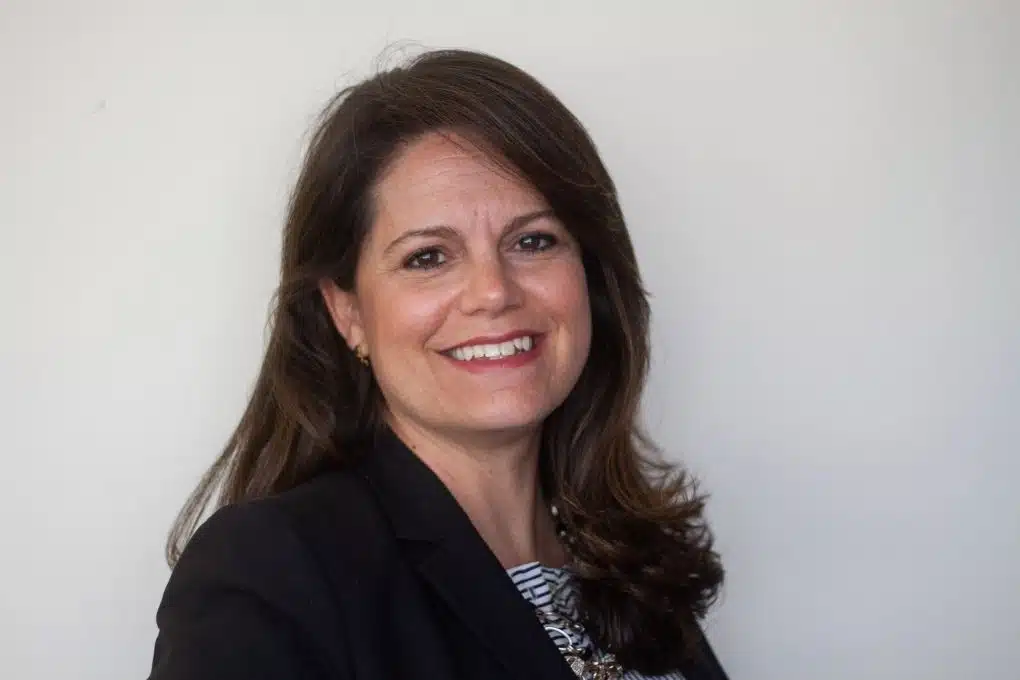
By LeAnne DeFrancesco, vice president at Vanguard Communications

When I joined my company’s AI Task Force in early 2024, I knew I was going to be the skeptic on the team. I had an open mind about AI tools for other tasks, but for writing? I was not enthused, mostly because I assumed AI outputs would be stale, cold and only tell half the story.

To me, writing is a sacred process that not just anyone can do. You may learn technique and pick up style, but I still believe that people are born with a storytelling brain, or they aren’t. They know how to thread together thoughtful content that keeps readers interested, or they don’t. They can put themselves in the shoes of their audiences and deliver what they need to know and care about, or they can’t.

So to ask a machine to create a very original, nuanced piece of content seemed ludicrous.

At the same time, I saw — like everyone else did — the media headlines that gave me pause:

Dynamic Duo

The more I researched, read, talked to colleagues and consulted with peers about how they use AI to help them generate ideas or be a sounding board for their content, the more my stance on AI softened. Particularly in an industry with unforgiving deadlines and late-breaking curveballs, if AI could help me deliver for my boss or my clients by providing small, research-y shortcuts — without being dishonest or misleading — why not give it a go?

The same is true in advocacy communications. More often than not, probably, staff at advocacy organizations are stretched. There is a lot to do, to develop, in a short window of time. Breaking news on their issue changes their day in an instant. Response time must be quick, yet messaging must be on point. They need shortcuts without sacrificing the message.

If your goal is to change people’s hearts and minds about something, it’s not enough to just deliver the facts and summarize, which is what AI is good at. You need context, emotion and a personal story. You need impact, examples and turns of phrase that resonate with people. You might need humor, you might need shock. This is what humans are good at.

So really, combining robot with writer (or AI with author) is a perfect coupling.

Don’t Be Talked Into Breaking Up

There have been many threads on social media, blogs and podcasts pitting writers against AI. But in my view, there is no fight here, as long as leaders know how to use AI ethically and provide guidance for their employees to do the same.  

  • AI is good at some things, like searching online information quickly, and should be embraced for that quality. It can be clutch.
  • Humans are good at other things, like providing the “color commentary” around issues and making things personal, relatable and memorable.

Writing is indeed an art, and AI is a science. A tool. A technology that can help us get to our beautiful prose and thoughtful executions more quickly.

Which for those of us in PR and in advocacy communications, sounds dreamy.

LeAnne DeFrancesco is a vice president at Vanguard Communications in Washington, D.C., where she leads the firm’s Design and Editorial practice. She joined WWPR’s Pro Bono Committee in 2018, where she has helped several D.C.-based organizations enhance their PR and communications activities.


Member Spotlight: Thy-Ann Nguyen

Could you tell me about your background and what drew you to your current position?
I started my career as an administrative assistant at a health care PR firm and have spent the past 14+ years working in healthcare strategic communications—nine of which have been at CURA Strategies, where I’ve operated at the intersection of communications and operations. I’ve always been drawn to mission-driven work and to the health care space in particular, because of how directly it impacts people’s lives. Over the years, I’ve grown alongside CURA—from leading client campaigns to shaping internal processes and culture. Today, as Chief of Staff, I focus on scaling our impact by aligning our people, systems and strategy so we can do our best work. I love helping people connect the dots and creating an environment where everyone feels empowered to work to their strengths.

Describe what excites you most about your job.
I love building relationships—both with our clients and our team. There’s something really special about seeing people light up when they’re doing work that aligns with their strengths. I get energy from creating a positive, high-performing environment where kindness and empathy are just as valued as results. I also enjoy the behind-the-scenes challenge of making sure everything runs smoothly so that our team can focus on making an impact.

What is the most rewarding project you’ve done recently?
Helping to plan and lead our annual two-day company off-site retreat this year was incredibly rewarding. This year’s theme was Connected in Purpose, and it was such a great team-building experience. We covered a lot of topics including Kolbe and CliftonStrengths (both very useful assessments for team building/management if you haven’t heard of these before!) along with AI and project management—all in a way that felt energizing and joyful. These retreats are always the highlights of my years at CURA and reminds me that investing in our people and culture isn’t just good for morale—it directly fuels our ability to deliver excellent service for our clients.

As a member of WWPR, what have you gained from your experience?
Every time I attend a WWPR event, I leave feeling inspired. The women in this community are doing amazing things, and yet there’s a real warmth and openness that makes it easy to connect. I love that the programming includes everything from social events to professional development—it reflects the whole person. It’s rare to find a group that feels both ambitious and genuinely supportive, and it’s been such a joy to be part of it!

What PR/Comms trends, tech, or practices are you and your company adopting this year, and what have been the results?
Like many in our field, we’re actively exploring how AI can enhance—not replace—our work. As a team, we lean into using AI effectively and ethically and encourage the team to use it and share best practices with each other. We host regular trainings to help us stay on top of the latest tools and aim to focus even more this year on experimenting with specific AI tools that can streamline processes, spark creativity and make data analysis more actionable. The key for us has been balancing innovation with intention—we always ask, “Does this improve the quality of our work or our client’s experience?” When the answer is yes, we lean in.

Is there any book or podcast you recommend?
I recently listened to Atomic Habits by James Clear, and I loved how it breaks down goal- setting and behavior change into simple, actionable steps. It’s a great reminder that small habits can lead to big transformation. It’s helped me take a more intentional approach to both personal and professional growth.

Leading Through Change: Insights from a Former Emerging Leaders Award (ELA)  Winner

By Elisa O’Halloran

Jennifer Min, Lead at Foretell, a communications advisory and former Emerging Leaders Awards (ELA) winner has been helping brands, organizations, and CEOs move faster, think differently, and build for what’s next.

“It’s been incredible to be a part of Foretell’s growth,” she shares. “I’m thrilled to be working alongside the founders, former Shopify alumnus Erin Pelton and Nicole Flotteron.”

For Jennifer, this role represents a shift from her government background. As Director of Digital Media at the Department of Defense, she found working with creators and social media O’influencers to be a fascinating and important part of digital media strategy—an area she views as an essential part of modern communications.

“I joined Foretell because I wanted to push boundaries in this space and become a leader in this field alongside the team,” she says. 

Being recognized by WWPR and ELA was incredibly meaningful,” she reflects. Winning the ELA award in the government category remains a milestone in her career. “It was inspiring to be surrounded in a room full of brilliant women in communications. I felt honored to be part of such a powerful community.”

Over the years, the WWPR and ELA network has remained an important resource. “It’s a supportive and inclusive group,” she says. “Whether you’re looking to discuss new trends in digital media strategy or curious about trends at a big tech company, there is a strong chance that someone in the WWPR community will share insights and advice.”

For women rising in public relations and communications today, Jennifer’s advice is simple: “Stay curious, stay agile, and embrace new strategies as the landscape shifts.” Adaptability, she believes, is one of the most valuable qualities in a fast-changing profession.

A Builder, An Innovator, and Future Ready voice for the Next Generation

By Elisa O’Halloran

“I am a storyteller at heart,” says Sukhi Sahni, who brings her passion for building, innovating, and creating to everything she does. Whether she’s building a new team from the ground up to support a start-up or a transformational brand shift for a seasoned company; strengthening an organization’s foundation using modern integrated communications tool kits, she leads with vision.

As an adjunct professor at Georgetown University, Sukhi teaches Modern-Day PR Storytelling—equipping the next generation of communicators with skills to thrive in a digital-first, AI-augmented landscape.

Outside the corporate world, Sukhi also serves on several nonprofit boards, including her favorite, National Alliance on Mental Illness (NAMI), where she advocates for mental health awareness and stigma reduction (NAMI). “I truly believe mental health is the foundation of happiness and success,” she shares. “I’m looking forward to helping reduce the stigma and make a lasting impact in our communities.” 

Outside of work, she and her husband are discussing launching a lighthearted podcast about the ups and downs of 20+ years of marriage. Sukhi adds, “We want to laugh a little, share a little and remind people that marriage takes work, but you can have fun at the same time.”

As a past Emerging Leaders Award (ELA) judge, Sukhi says the experience was an honor and a great opportunity to witness tremendous young talent, meet new people, and expand her perspective. “I highly recommend MarComm professionals to participate in judging such awards when possible—it helps diversify your thinking and introduces you to a strong pipeline of talent.”

WWPR and ELA have also given her a platform to pay it forward. “I firmly believe that we get better, together and the opportunity allowed me to turn that belief into action,” Sukhi says. Serving as a WWPR advisory council member allows her to give back while continuing to learn from peers.

When asked what advice she would offer rising women in public relations, Sukhi said, “Be proud of everything that makes you different—your culture, your upbringing, your values, your faith. What sets you apart is your greatest superpower, not your weakness.” As she noted in her op-ed in the Washington Business Journal a few years ago, “Being brown is advantageous.”

Sukhi also encourages young women in public relations to think beyond tactics and become business- first communicators, and future proof themselves by always learning and staying curious. She guides young leaders to understand how companies make money, how to pitch for influence and build for impact. She adds, “strategic communications and public relations is about driving real outcomes and earning a seat at the table.”

A standout moment from her WWPR experience? “All of the events have been great—very thoughtful and they really foster a sense of community within WWPR,” she shares. One highlight was a fireside chat with Axios’ Eleanor Hawkins. “It was a dynamic conversation, and we’ve stayed in touch since. Her newsletter has become a must-read for every MarComm pro looking to stay sharp and informed.” Learn more about Sukhi Sahni on LinkedIn.

Leading Through Change: Lessons from an ELA Alumna

By Elisa O’Halloran

Over the past several years, Rosemary Girard has grown and scaled her role—both in the number of people and remits she oversees, and in the breadth of the subject matter. Now a Senior Vice President at Edelman, she leads corporate and executive communications for a large tech company that plays a significant role on the global stage and in AI innovation.

“Diving deeper into my learning on AI has been a fun and challenging project to sink my teeth into,” Rosemary says. “It’s also a necessary one, given it’s a focal point of the thought leadership being driven by the executives I support.”

Outside of work, she makes it a point to fuel her passions—traveling, hiking, photographing, scuba diving, and flower arranging. “I believe that fueling my passions outside of work makes me a better professional,” she adds.

Looking back on her Emerging Leaders Awards experience, Rosemary says, “It was truly an honor and something I think back on very fondly. While I always strive to do my best work with or without recognition, I’m so grateful that my leadership stood out and that I was able to represent Edelman in this way.”

Although she’s since moved to California, she credits WWPR and the DC PR community for shaping her career: “It reinforced for me the power of community in this industry, especially in the Washington, DC area. The DC community is a special network and will always feel like home to me.”

When asked what advice she’d give to up-and-coming women in PR—or future ELA winners—Rosemary says, “Don’t compare your own blooper reel to someone else’s highlight reel. Especially under pressure, it’s easy to convince yourself that other people you admire haven’t made the same mistakes you have. But it’s important to fail fast, train your resilience muscle, and keep moving forward. The more senior I’ve become, the more I’ve found that the highs are higher and the lows are lower, so it’s important for me to maintain perspective and focus on making the next best decision with the information I have at the time and to trust my instincts.”

A standout moment from her ELA experience? “Learning about the work of the other nominees,” she says. “Communications professionals are often doing quiet work behind the scenes, so it was wonderful to hear so many women get the praise they deserve.”

Join the Mailing List

Stay connected with WWPR by signing up for our mailing list! You’ll receive the latest updates on professional development events, exclusive networking opportunities, leadership initiatives, and more!