The 3 Core Messages Every Nonprofit Needs (And How to Write Them in 90 Minutes)
Written by Christina Crawley, Founder & Lead Consultant, Virtuosa.
This resource is the first in a series of the 2026 WWPR Nonprofit Communications Toolkit, a year-long series of practical guides designed specifically for small to mid-sized nonprofits working with limited staff and budgets. Each quarter focuses on a different theme, and each resource is designed to be immediately implementable without prior communications experience or expensive tools. For questions or feedback: probono@wwpr.org.

Here’s a scenario you might recognize: You’re an Executive Director or Program Manager. Communications is one of seven things on your plate today, somewhere between grant writing and fixing the broken copier. Someone asks, “So what does your organization do?” and you launch into a detailed explanation of your programs, your history, your partnership model, and your theory of change. Two minutes later, you realize their eyes have glazed over.

Or maybe this: Your board members want to help spread the word about your organization, but when they talk, everyone says something slightly different. A potential donor hears three different descriptions of your work and wonders if you even know what you do.

The truth is: If you can’t explain what you do in a way that’s clear, compelling, and consistent, nothing else in your communications will work.

Why This Matters (And Why It’s Hard)

Clear messaging is essential. You need journalists to understand your story if you want substantive media coverage. You need donors to understand your story if you want them to support you – or to keep coming back. And you REALLY need your board and staff to understand your story if you want them to truly champion your organization in every conversation and room they are in.

The problem is a simple one: you’re too close to. You live and breathe your mission every day, so what seems obvious to you is actually packed with insider language, organizational history, and assumptions that outsiders don’t share. You know your story better than anyone. The truth is, you just aren’t telling it in a way that is resonating.

The good news? You don’t need a communications degree or a consultant to fix (or create) your messaging.

You can start by stepping back and answering three fundamental questions in the simplest way possible. This Messaging Guide & Workbook will walk you through exactly how to do that.

Before you post anything else on social media, pitch any more journalists, or write another grant proposal, start here.

Scroll down to explore the full guide or download a PDF version below.


The Three Messages Every Nonprofit Needs

Message 1: What We Do (In One Sentence)

This is what people will refer to as your elevator pitch. All that means is that someone asks, “What does your organization do?” You should be able to answer in 10-15 words.

Bad Example: “We’re a community-based organization focused on empowering youth through educational enrichment programming and wraparound support services.”

Good Example: “We help low-income high school students in DC graduate and get into college.”

Why It Works: No jargon. Specific about who you serve and what happens. It’s memorable, and someone can easily repeat this to a friend.

Your Turn:

We help _________________ [who] do/achieve _________________ [what].

Pro Tip: Make sure both the WHO and the WHAT are as specific as possible. Not just “students,” but “low-income, high school students in DC.” Not just “graduate” or “apply to college,” but “get in.”

Message 2: Why It Matters (The Problem You Solve)

This is where you connect your work to a real problem or need people care about. Why should anyone pay attention?

Bad Example: “Education is important for society.”

Good Example: “In Ward 8, only 54% of students graduate high school. Without a diploma, they face a lifetime of limited opportunities and lower earnings.”

Why It Works: Specific data. Real consequences. Creates urgency.

Your Turn:

The problem: _________________________________________________________________

Why it matters: ______________________________________________________________

One stat that proves it: _______________________________________________________

Message 3: What Makes Us Special (Your Unique Value)

Why should someone support YOU instead of another organization doing similar work? This isn’t about being the biggest or oldest—it’s about what you do differently or better.

Bad Example: “We have a holistic, trauma-informed approach with evidence-based practices.”

Good Example: “Kids who go through our program are 85% more likely to graduate than kids who don’t.”

Why It Works: Concrete and specific. Easy to understand why this matters.

Your Turn:

What makes us different: ______________________________________________________

Why that matters to our audience: ______________________________________________

How to Develop Your Messages

Individually, each of the following steps shouldn’t take more than an hour or so. Collectively, they are priceless.

Step 1: Brain Dump 

Gather 4-6 people who know your organization well (staff, board members, long-time volunteers, a satisfied person who has benefited from your program). Separately, have each person write down:

  • What we do
  • Who we serve
  • What problem we solve
  • What makes us special

Pro Tip: Don’t be afraid to stretch yourself and get input from people whose answers you can’t necessarily predict.

Step 2: Find the Patterns

Look at what everyone wrote. What words or ideas keep coming up? What’s different between each person’s answer? Where’s the confusion?

Step 3: Draft Your Three Messages

Use the templates above. Write them out. Read them aloud. If you stumble over the words or have to explain what you mean, simplify.

Step 4: Test Them (Ongoing)

Share your draft messages with:

  • Someone who knows nothing about your organization (Can they repeat it back?)
  • A board member (Do they find it compelling?)
  • A donor or volunteer (Does it match why they support you?)

Refine based on feedback. Then commit.

Common Mistakes to Avoid

Avoid using jargon or buzzwords. Words like “holistic,” “empower,” “leverage,” “capacity-building,” and “systemic change” mean nothing to most people. Use plain language.

Avoid talking about yourself instead of the impact. “We were founded in 1987” is not a message. “We’ve helped 10,000 students graduate” is.

Avoid being too broad. “We serve the community” tells me nothing. “We serve single mothers in Southeast DC” tells me everything.

Avoid having different messages for different people. Everyone in your organization should be saying the same thing. If your board says one thing and your staff says another, you don’t have a message; you have confusion.

Once You Have Your Messages, Use Them Everywhere

  • Website homepage (first thing visitors see)
  • Social media bios
  • Email signatures
  • Fundraising appeals
  • Media pitches
  • Board presentations
  • Volunteer orientations
  • Grant applications

The rule: If someone visits your website, scrolls through your Instagram, or talks to your Executive Director, they should hear the same three core messages.

Quick Self-Check

  • Can someone outside your organization repeat your messages after hearing them once?
  • Are your messages free of jargon and acronyms?
  • Do your messages focus on impact, not just activities?
  • Is everyone on your team saying the same thing?

If you answered “no” to any of these, keep refining.

What’s Next?

Once you have your three essential messages, you’re ready to:

  • Identify your key audiences (February toolkit)
  • Audit your current communications (March toolkit)
  • Start building your story bank (April toolkit)

But don’t skip this step. Clear messages are the foundation for everything else.

Your Three Messages Worksheet

Message 1: What We Do

______________________________________________________

______________________________________________________

Message 2: Why It Matters

______________________________________________________

______________________________________________________

Message 3: What Makes Us Different

______________________________________________________

______________________________________________________

Tested with:

  • Someone unfamiliar with our work
  • A board member
  • A donor/volunteer
  • Our team

Date finalized: ___________________

Next review date: ___________________ (Revisit annually or when your work significantly changes)

This resource is part of the 2026 WWPR Nonprofit Communications Toolkit. Free for nonprofit use. For questions or feedback: probono@wwpr.org.

About the Author: Christina Crawley is a strategic communications leader with 20 years of experience helping nonprofits and mission-driven organizations translate complex issues into compelling narratives. As the Founder & Principal of Virtuosa, she advises social impact organizations on brand positioning and executive communications. She serves as Pro Bono & Social Impact Co-Chair for Washington Women in PR.

Meet Our 2026-2027 Pro Bono Client: Community Bridges

WWPR is thrilled to announce Community Bridges as our pro bono client for 2026-2027. After reviewing 34 applications from exceptional organizations across the DMV area, Community Bridges stood out for its transformational impact, strategic readiness, and powerful untold stories.

EMPOWERING THE NEXT GENERATION OF LEADERS

Community Bridges empowers girls from under-resourced communities in Montgomery County, Maryland, to become resilient young women who thrive as students, engaged community members, and confident leaders. Through year-round leadership development, academic support, and college readiness programming, they serve girls in grades 4-12, often helping a single girl for more than 10 years.

Their outcomes speak for themselves: last year, 100% of Community Bridges’ high school seniors graduated and enrolled in college. They are eager to work with the experts in WWPR’s membership to strengthen their reach and visibility.

“We believe that with WWPR’s guidance and expertise, we can expand our reach, strengthen our communications capacity, and inspire broader community engagement,” said Shannon Babe-Thomas, Executive Director of Community Bridges. “Ultimately, we want to enable more girls and families to benefit from our programs.”

WHY COMMUNITY BRIDGES

The WWPR Pro Bono & Social Impact Committee, co-chaired by Christina Crawley and Alicia Aebersold, selected Community Bridges after a rigorous evaluation process that included a deep assessment of organizational capacity, impact potential, and execution readiness.

“Community Bridges has the perfect combination of compelling stories to tell and the infrastructure to implement strategic communications,” said Crawley. “They’ve built an incredible program with proven results. Now we get to help them amplify those stories to attract new supporters, strengthen partnerships, and expand their reach.”

Community Bridges already has strong foundations in place—including a signature annual gala that raises $100K, active social media channels, and established partnerships with organizations like Wells Fargo and Montgomery County Public Schools. WWPR’s support will help them scale strategically through media training, storytelling frameworks, and capacity-building guidance.

A NEW WAY TO SERVE: THE WWPR NONPROFIT COMMUNICATIONS TOOLKIT

The competitive selection process for our new pro bono client revealed something important: dozens of worthy organizations need communications expertise, but we only have one slot for a pro bono client. 

That’s why the WWPR Pro Bono Committee is launching a new initiative in early 2026: the WWPR Nonprofit Communications Toolkit. This program will provide free educational resources—including one-page guides, expert Q&As, and potentially webinars—available to any nonprofit in the DMV area.

The Toolkit will allow WWPR to share its expertise more widely while creating opportunities for more members to contribute.

GET INVOLVED

WWPR members interested in supporting Community Bridges or contributing to the Toolkit initiative can join the Pro Bono & Social Impact Committee email list by contacting Christina Crawley or Alicia Aebersold. Opportunities will include everything from media training and messaging support to creating educational resources for the nonprofit community.

We’ll share more details about the partnership kickoff and Toolkit launch very soon. In the meantime, we invite you to learn more about Community Bridges at communitybridges-md.org.

Here’s to two years of empowering young women to lead!


ABOUT WWPR’S PRO BONO & SOCIAL IMPACT PROGRAM

Since 2003, Washington Women in Public Relations has partnered with nonprofit organizations to provide strategic communications support, capacity building, and expertise. The program reflects WWPR’s commitment to strengthening our community while providing members with meaningful opportunities to give back through their professional skills.

CONTACT:

Christina Crawley, Pro Bono & Social Impact Committee Co-Chair

Alicia Aebersold, Pro Bono & Social Impact Committee Co-Chairprobono@wwpr.org

Washington Women in Public Relations Announces Community Bridges as 2026-2027 Pro Bono Client

DMV Organization Empowering Girls to Break Cycles of Poverty Through Education Selected from Competitive Field of 34 Applicants

WASHINGTON, D.C. – Washington Women in Public Relations (WWPR) today announced Community Bridges as its pro bono client for 2026-2027. The Montgomery County, Maryland-based nonprofit empowers girls from under-resourced communities to become resilient young women who thrive as students, engaged community members, and confident leaders.

Community Bridges was selected from a competitive field of 34 applications following a rigorous evaluation process that assessed organizational capacity, impact potential, and execution readiness. The organization serves girls in grades 4-12 through year-round leadership development, academic support, and college readiness programming, last year achieving a 100% graduation and college enrollment rate for high school seniors.

“Community Bridges has the perfect combination of compelling stories to tell and the infrastructure to implement strategic communications support,” said Charmaine Riley, President of WWPR. “They’ve built an incredible program with proven results, and their mission of transforming the lives of young women through education and leadership development aligns deeply with WWPR’s values. We’re excited to help them amplify their stories to attract new supporters, strengthen partnerships, and ultimately serve even more young women.”

Over the next two years, WWPR volunteer members will provide strategic communications guidance and support to help Community Bridges expand its reach and visibility.

“We are thrilled and honored to be selected as WWPR’s pro bono client,” said Shannon Babe-Thomas, Executive Director of Community Bridges. “We believe that with WWPR’s guidance and expertise, we can expand our reach, strengthen our communications capacity, and inspire broader community engagement. Ultimately, we want to enable more girls and families to benefit from our programs and help elevate the narrative around what’s possible for young women from under-resourced communities.”

The pro bono partnership model provides comprehensive communications support crafted to meet the goals the client identifies, which may include everything from strategic planning to support with media relations or social media. WWPR members volunteer their time and expertise to build long-term communications capacity within the client organization.

Community Bridges joins a distinguished group of nonprofits WWPR has supported through its pro bono program, including Running Start (2024-2025), New Endeavors by Women (2022-2023), Academy of Hope (2020-2021), Sitar Arts Center (2018-2019), Bright Beginnings Inc. (2015-2017), and others dating back to 2003.

The partnership officially launches this month (January 2026).

About Community Bridges

Community Bridges empowers girls from under-resourced communities to become resilient young women who thrive as students, engaged community members, and confident leaders. Through integrated 4th through 12th grade programs, Community Bridges supports girls and their families living at or below the poverty level in Montgomery County, Maryland, using a holistic, long-term approach that addresses developmental needs and breaks cycles of poverty through education. For more information, visit communitybridges-md.org.

About Washington Women in Public Relations

Washington Women in Public Relations (WWPR) is a member-based professional society cultivating and inspiring female communicators to reach their full potential in the DC market and beyond. The organization is committed to providing leadership opportunities, professional development, mentorship, and industry networking. For more information about WWPR and its pro bono program, visit wwpr.org.

###

Celebrating our 2022-23 Pro Bono Client, New Endeavors by Women

By Anne Thomas, Pro Bono Chair

Another successful pro bono partnership has come to a close. New Endeavors by Women (NEW) was WWPR’s 2022-2023 Pro Bono client. NEW is guided by a mission to partner with homeless women to create new futures. NEW transforms lives by providing housing, fostering the development of life skills, and promoting education and employment to end the cycle of homelessness. They provide a nurturing environment so that women can recognize their worth. 

Over our successful two-year partnership, WWPR provided marketing and communications expertise to support NEW’s mission and improve their overall communication strategy. As part of this partnership, we also wanted to teach NEW’s team about communications best practices and provide them with helpful “how-to” guides to ensure they’d be set up for success upon the conclusion of our partnership.

Some highlights of our partnership include media training and pitching, social media strategy and recommendations, a website audit, and event support. 

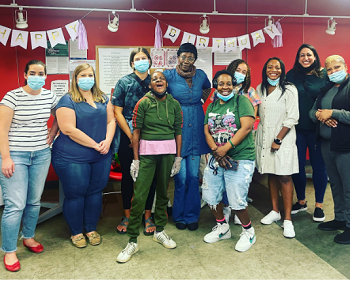
WWPR members visited the NEW team during April’s Birthday Celebration. The Birthday Celebrations are an opportunity for you to get to know NEW and the women better and also celebrate women who often go un-celebrated.

Media Training and Pitching

With the support of our pro bono committee, WWPR provided Wanda Steptoe, NEW Executive Director, with media training and best practices for media pitching. Here are just a few of NEW’s earned media during our partnership: 

We also helped NEW develop a media list and walked them through best practices for sending out pitches. 

Social Media Recommendations

After completing a review of NEW’s social media channels, the pro bono committee provided social media recommendations highlighting overall best practices for paid social media and strategies to increase organic followings and engagement. 

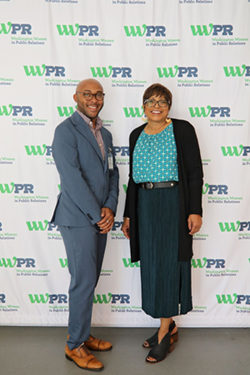
Dimetri O’Brien, NEW Communications Manager and Wanda Steptoe, NEW Executive Director at WWPR’s Woman of the Year Awards

Website Audit

The pro bono committee completed an audit of the NEW’s website, reviewing ease of use, design, mobile responsiveness, accessibility, SEO, and brand voice and tone. The NEW communications team was so thankful for our recommendations and they are excited to start implementing the changes on the website. 

Event Support

WWPR provided event support by providing recommendations on marketing events, promoting NEW’s events on WWPR channels, and volunteering at NEW fundraising events. 

Throughout the two-year partnership, WWPR raised over $3000 for NEW through ticket sales, member donations, and during our events. “It’s been a pleasure working with NEW and we can’t wait to watch them continue their success from the sidelines,” said Anne Thomas, WWPR Pro Bono Chair. 

The support of the Pro Bono committee was essential to our successful partnership with NEW. We’re looking forward to our new Pro Bono client kicking off in January. If you are interested in joining the Pro Bono committee, you can sign up here: https://wwpr.org/committees/.  

Join the Mailing List

Stay connected with WWPR by signing up for our mailing list! You’ll receive the latest updates on professional development events, exclusive networking opportunities, leadership initiatives, and more!